Thursday, 11 July 2019

International Perspectives


 Image result for education globally

International Perspectives 

Education in Netherlands
Education is compulsory in the Netherlands between the ages of the ages of 5 and 16. The instruction language is Dutch, but more and more schools and universities teach in English. Children in the Netherlands get 8 years of primary education, 4, 5 or 6 years of secondary education (depending on the type of school).
What are the Netherlands doing successfully?
1.       Schools in the Netherlands give homework in small quantities. Whereas in the USA they are known to give more than the recommended amount of homework to their students which is time consuming. Research has shown that play and exercise are vital to children’s growth and school performance hence why schools in Netherlands give homework to their pupils sparingly. Dutch students under the age of 10 receive very little homework which gives time for daily exercise.
22.    Education in the Netherlands is affordable. Primary and secondary education is free; parents need to pay for annual tuition ONLY after the child turns 16 years old and low-income families can apply for grants and loans (as the UK allows for university at age 18). For university students, the average cost of button is about $2000 per year; in the USA it is close to $10,000 which is a significant amount of money for education.
33.    There are different types of classes Dutch students can take for secondary school before they attend college. Students can take HAVO (senior general secondary education) or VWO (pre-university education) before they go to college. They can also take VMBO (preparatory secondary vocational education) this course is if they do want to attend college right away. This system allowed students to work with a program that will accommodate their needs.
44.     Education in the Netherlands involves learning a second language. While American students usually start learning a second language in middle school or high school, some primary schools in the Netherlands teach English as early as group 1m which is the equivalent of American kindergarten or UK nursery. (which Welsh schools tend to teach Welsh in nursery). All Dutch students learn English, but some schools require students to learn an additional language. There are even bilingual schools for every education level, where some classes are taught in English and others are taught in Dutch.
55.     Dutch school week is different from American school week and UK school week. A school day in primary school usually takes place from 8:30am-3:00pm on weekdays, but students go home for lunch instead of eating at the school canteen. On Wednesdays, schools dismiss students around noon. – this allows children to have a break from school and return with a clear mind set readying them to learn.
Education in Singapore
The Singapore education system. Pre-school is offered from age 3, in Singapore, with primary schooling from the age of around 7. After primary school children move onto secondary school, which runs for students ages from around 12, to 16 or 17.
11.   In 2015, the Organisation for Economic Cooperation and Development (OECD) rates Singapore as having the ‘best education system in the world’. OECD director Andreas Schleicher says that students in Singapore are especially proficient in maths and the sciences. In English, the average Singaporean 15-year-old student is 10 months ahead of students in westerns countries and 20 months ahead in maths. Singaporean students also score among the best in the world on international exams.
22.     Education in Singapore is superior because the classes are forced on teaching the students specific problems solving skills and subjects. The classroom is highly scripted, and the curriculum is focused on teaching students’ practical skills that will help them solve problems in the real world. Exams are extremely important, and classes are tightly oriented around them.
Education USA
Prior to higher education, American students attend primary and secondary school for a combined total of 12 years. Around age 6, U.S. children begin primary school, which is most commonly called ‘elementary school.’ They attend 5 or 6 years and then go onto secondary school.
11.     American students attend primary and secondary school for a combined total of 12 years. These are referred to as the first through twelfth grades.
22.    Around age 6, U.S. children begin primary school, which is commonly called ‘elementary school’. They attend 5 or 6 years and then go onto secondary school.
33.    Secondary school consists of two programmes; the first is ‘middle school’ and the second is ‘high school’. A diploma or certificate is awarded upon graduation from high school. After graduating. Students may go onto college or university which is known as ‘high education’.
44.     U.S. high education costs around $14,300 per year depending on the college or university. The US differentiates between in-state tuition fees and out-of-state tuition fees, as well as between private and public universities. These distinctions determine the tuition fee. The average tuition fee for public two-year institutions is around £3000 per tear. While the average fee for private four-year institutions is around $29,000 per year. Some private four-year institutions can cost up to $50,000 per year. Loans are available for students to be able to fund their education.
Education in the UK
UK education system. The education system in the UK is divided into 4 main parts, primary education, secondary education, further education and higher education. Children in the UK must legally attend primary and secondary education which runs from about 5 years old until the student is 16 years old.
11.    The UK education system is divided into four main parts, primary education, secondary education, further education and higher education. Children in the UK legally must attend primary and secondary education which runs from 5 years old till 16 years old.
22.     The education system in the UK also split into key stages.
·         Key stage 1: 5-7 years old
·         Key stage 2: 7-11 years old
·         Key stage 3: 11-14 years old
·         Key stage 4: 14-16 years old
3 3.    Students are assessed at the end of each stage. The most important assessments occurs at age 16 when students pursue their GCSE’S. Once students complete their GCSE’s they have the choice to go onto further education or finish school and start working.

References
TransferWise https://transferwise.com/gb/blog/singaporean-education-overview (undated) (accessed 09.07.19)
Study in the UK https://www.internationalstudent.com/study_uk/education_system/ (undated) (accessed on 09.07.19)
Five Reasons Education in the Netherlands Works Well https://borgenproject.org/education-in-the-netherlands-work-well/ (2017) (accessed on 11.07.19)
Why Education in Singapore is so Good https://borgenproject.org/why-education-in-singapore-is-so-good/ (2017) (accessed on 11.07.19)
International student https://www.internationalstudent.com/study-abroad/guide/uk-usa-education-system/ (undated) (accessed on 11.07.19)

Understanding the American Education System https://www.studyusa.com/en/a/58/understanding-the-american-education-system (2018) (accessed on 11.07.19)


Tuesday, 9 July 2019

how can teachers use technology effectively in the primary classroom?


Image result for ict in primary education

How can teachers use technology effectively in the primary classroom?
ICT has been a big part of education since from when I was in primary school years ago. From personal experience, we were rewarded with ICT time. This included using Nintendo DS’, computers, iPads etc. It argues that primary ICT is subject to a set of ‘big’ priorities that often have little to do with the day-to-day concerns of teachers and learners. Selwyn et al explained how education is on the brink of being transformed through learning technologies; however, it has been on that brink for some decades now. Selwyn, Potter and Cranmer’s book goes on to say how In the UK ICT is used to refer to the digital technologies themselves, but also to the discrete curriculum subject. In the original version of the National Curriculum for primary schools, the use of computers was part of Design and Technology, before enjoying several years of growth and development as a subject under the label of ‘Information Technology’. The change in 2000 to a curriculum subject called ‘ICT’ signalled a formal move towards a more inclusive way of working with a technology in school, with subsequent schemes of work emphasising a cross-curricular approach. (primary schools and ICT; learning from pupil perspectives. Selwyn et al., (2010) p.5)
ICT is important in primary education because it enables kids to search for the information they need and to organise what they have found. As children progress through the school system, they become increasingly responsible for their own learning. Many believe that ICT needs to be better integrated into curriculum's, so all schools produce computer literate, independent learners.
The question is how can ICT help education? ICT can enhance the quality of education in several ways: by increasing learner motivation and engagement, by facilitating the acquisition of basic skills, and by enhancing teacher training. ICT also transformational tools which, when used appropriately can promote the shift to learner-centred environment.
One of the most significant ‘digital’ issues to have recently captured the attention of sociologists of education is the temporal and spatial expansion of educational processes and practices through technological means. Indeed, the negation of boundaries lied at the heart of the ideological promises of digital education. (Selwyn, N & Facer, K. (2010) p.6)

The provision of digital education on an expanded and accelerated ‘any time, any place, any pace’ basis raises a host of questions relating to educational engagement and educational governance – not least the redistribution of responsibilities across different sites and actors (Webster 2013). Technologies are seen to be enabling educational engagement regardless of place, space or setting. (Selwyn, N & Facer, K. (2010) p.7) Selwyn’s (2011) study of globally distributed cohorts of distance learners found the processes of online study to be constrained substantially for many women by the temporal constraints of child-raising and household work commitments. Similarly, Erichsen and colleagues’ (2013) study of online doctoral education highlighted issues of cultural and racial (mis)understandings between students and staff as impeding the fully beneficial ‘participation’ of many students. As such the individualisation of action associated with these digital forms of education could be increasing the risks as well as opportunities of educational engagement. As such, this work reminds us that the positioning of technology-supported individualisation as a biographical solution to systemic contradictions is not without its potential problems (Popkewitz 2006).
There are challenges when defining digital literacy as Savage, M & Barnett, A (2015) suggest that the traditional interpretation it means to be able to read and write. This definition largely reflects the time in which it came into common use and the dominate tools for accessing and communicating knowledge and understanding beyond verbal discourse, i.e. written and printed text in physical forms. One simple was to extend this traditional definition would be to say it is about ‘reading media and writing (producing) media’ (Ryberg and Georgsen, 2010, p.91)
The national curriculum for computing begins with the following statement regarding the purpose of study:
Computing also ensures that pupils become digitally literate – able to use, and express themselves and develop their ideas through, information and communication technology – at a level suitable for the future workplace and as active participants in a digital world.
(DfE, 2013)
Digital literacy is also referred to in the computing curriculum aims to ensure that all pupils:
·         Can evaluate and apply information technology, including new or unfamiliar technologies, analytically to solve problems;
·         Are responsible, competent, confident and creative users of information and communication technology.
(DfE, 2013)
Digital literacy components of the Key Stage 1 and Key Stage 2 computing programmes of study (DfE, 2013)
Key Stage 1 pupils should be taught to:
Key Stage 2 pupils should be taught to:
·         Use technology purposefully to create, organise, store, manipulate and retrieve digital content;
·         Recognise the common uses of information technology beyond school;
·         Use technology safely and respectfully, keeping personal information private; identify where to go for help and support when they have concerns about content or contact on the internet or other online technologies.
·         Understand computer networks which can include the internet; how they can provide multiple services, such as the world wide web; and the opportunities they offer for communication and collaboration;
·         Use search technologies effectively, appreciate how results are selected and ranked, and be discerning in evaluating digital content;
·         Select, use and combine a variety of software (including internet services) on a range of digital devices to design and create a range of programs, systems and content that accomplish given goals, including collecting, analysing, evaluating and presenting data and information;
·         use technology safely, respectfully and responsibly; recognise acceptable/unacceptable behaviour; identify a range of ways to report concerns about content and contract.


References
Selwyn, N et al., (2010) Primary schools and ICT; learning from pupil perspectives. Wiltshire
Selwyn, N., & Facer, K. (2014). The sociology of education and digital technology: past, present and future. Oxford Review of Education
Savage, M., & Barnett, A (2015). Digital Literacy for Primary Teachers. Northwich

Monday, 8 July 2019

what is reasoning?

What is reasoning? Why is reasoning and problem solving important to teach in modern primary education?

The dictionary generally defines ‘reasoning’ as the action of thinking about something in a logical, sensible way. However, from an academic point of view, reasoning is defined as a crucial element in achieving this aim is to facilitate the development of numerical reasoning: the ability of the learner to apply their numeracy to a multitude of contexts in order to solve problems.
There are reasons why teaching and learning focuses on reasoning in the classroom, logical reasoning requires meta-cognition (thinking about thinking). It influences behaviour and attitudes through larger engagement, requesting appropriate help (self-regulation) and seeking conceptual understanding. Reasoning promotes these traits because it requires children to use their mathematical vocabulary. In short, reasoning requires a lot of active talk. Active listening is equally important and if done right can also ensure increased learning autonomy for pupils.

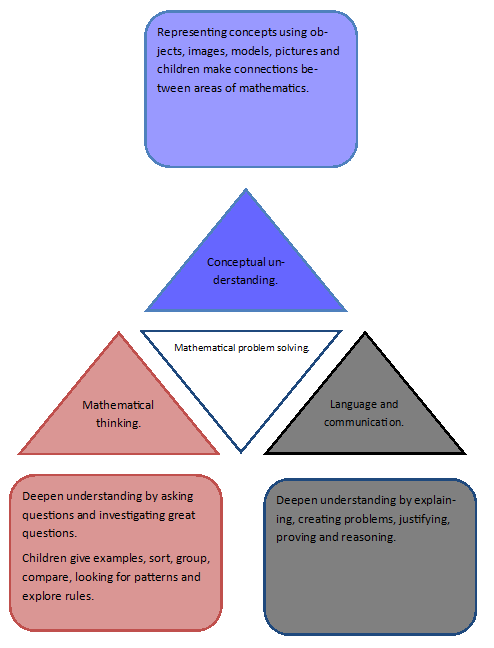
John bee reasoning and problem solving 1
Helen Drury cleverly details what should underpin mathematics teaching and learning. It can be used as a good starting point to redesign the mathematical curriculum with a focus on reasoning and problem solving. 5 principles were created from this chart for developing reasoning in the primary classroom;
1 - start lessons with a question
2 - students needs to wonder and struggle
3 - the teacher is not the answer key
4 - say yes to the students original ideas (but not yes to the methodical ideas)
5 - play!
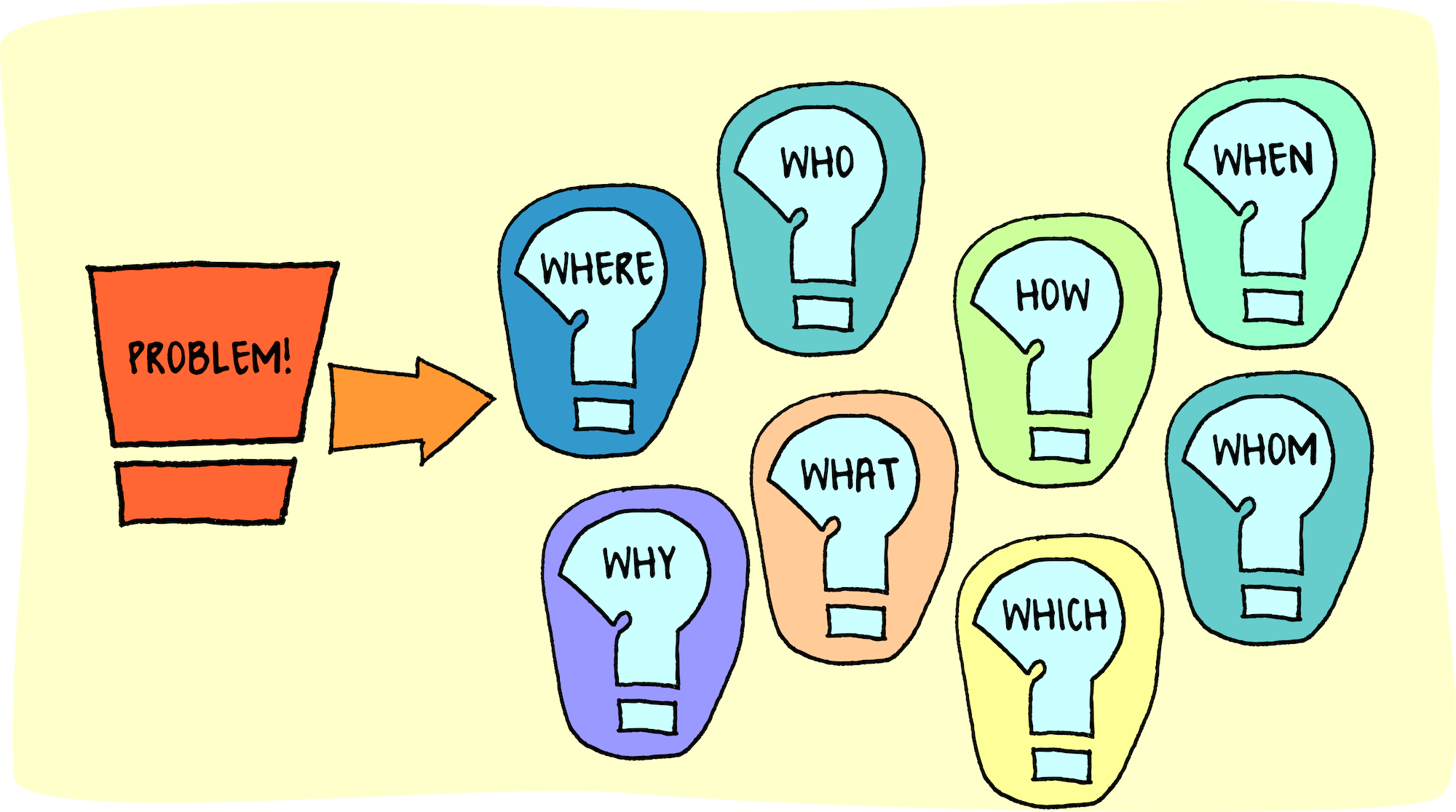
When children learn problem-solving skills they gain confidence in their ability to make good decisions for themselves. Using effective problem solving techniques will help children avoid conflicts in a school setting and in their day to day lives. It can also strengthen children beginning empathy skills. It can help children learn more positive attributions about other persons' intentions. Problem solving is essential for school readiness and academic success. There are a few steps to follow when using problem solving skills in an academic perspective;
  • Define the problem - looking at the situation or the problem carefully: try to be specific while defining the problem, do not try to look at the situation before thinking about it.
  • Identify options - making a list of all that you can do: try to be creative and think of all possible options, try to avoid the more obvious options.
  • Identify the best solution - thinking about each option and selecting the best one: try to be sure that the selected solution will produce the desired results, try to avoid selecting the easiest option.
  • Plan to achieve the best solutions - thinking about how to get at the solution and enlisting the resources needed to achieve the solution: try to think through the plan and how the solution thought of will affect other people, try not to reject other ideas.
  • Evaluate results - to determine if it is the best possible solution to the problem: evaluation should be immediate and not be to delayed, try to avoid the assumption that the problem will stay solved.
So, what is problem solving and why is it important?

The ability to solve problems is a basic life skill and is essential to our day-to-day lives, at home, at school and at work. We solve problems everyday without really thinking about how we solve them. An example would be; its raining and you need to go to the store. What do you do? There is a numerous amount of solutions. Take an umbrella and walk. If you don’t want to get wet, you can drive, or take the bus. You might decide to call a friend for a lift, or you might decide to go to the store another day to avoid the rain all together. There is no right way to solve this problem and different people will solve it differently.

Problem solving is the process of identifying a problem. Developing possible solution paths and taking the appropriate course of action.

Defining problem solving skills

Problem solving is the process of identifying a problem. Developing possible solution paths and taking the appropriate course of action.

Tim Hicks, 2018 has wrote about the 7 stages of problem solving in education and how problem-solving effects education. The stages are clear and constructive.
1         Identify the issues;
·         Be clear about what the problem is
·         Remember that different people might have different views of what the issues are
·         Separate the listing of issues the identification of interests
2         Understand everyone’s interests;
·         Critical step usually missed
·         Interests are the needs that you wan satisfied by any given solution. Often ignore the true interests as we become attached to one solution
·         The best solution is the one that satisfies everyone’s interests
·         Time for active listening
·         Separate the naming of interests from the listing of solutions
3         List the possible solutions (options);
·         Time for brainstorming, lots of room for creativity
4         Evaluate the options;
·         What are the pluses and minuses?
5         Select an option or options;
·         What is the best option in the balance?
·         Is there a way to bundle several options together for a more satisfactory solution?
6         Document the agreement(s);
·         Don’t rely on memory
·         Writing it down will help you think through all the details and implications
7         Agree on contingencies, monitoring and evaluation;
·         Conditions may change. Make contingency agreements about foreseeable future circumstances
·         How will you monitor compliance and follow-through?
·         Create opportunities to evaluate the agreements and their implementation
This process can be used in a large group, between two people, or by one person who is faced with a difficult decision. The more difficult and important the problem, the more helpful and necessary it is to use a disciplined process.
Effective problem solving does take some time and attention more of the latter than the former. But less time and attention than is required by a problem not well solved. What is really takes is willingness to slow down. A problem is like a curve in the road. Take it right and you’ll find yourself in good shape for the straight away that follows. Take it too fast and you might not be in as good shape. (Tim Hicks, 2018)


References
Reasoning in the classroom https://hwb.gov.wales/respository/resources/1f8bd393-a5e6-479b-8ba0-0a1ccc1b1222/en dated: 2019 (accessed on 17.06.19)
dated: 2019 (accessed on 17.06.19)
Role of teacher in teaching problem-solving skills 
https://www.academa.edu/6891418/Role_Of_Teacher_In_Teaching_Problem-Solving_Skills
(undated) (accessed on 17.06.19)
What is problem solving and why is it important? https://ccmit.mit.edu/problem-solving/ (undated) (accessed on 08.07.19)
Seven Steps to Problem Solving in the Workplace https://www.mediate.com/articles/thicks.cfm (Tom Hicks, 2018) (accessed on 08.07.19)